

PCB Assembly Process
A controlled, repeatable PCB assembly process built for speed, accuracy, and long-term reliability. From DFM review and material control to SMT/THT assembly, inspection, testing, and final shipment, FastTurn delivers consistent PCBA execution for prototypes through production.
- All uploads are secure and confidential.
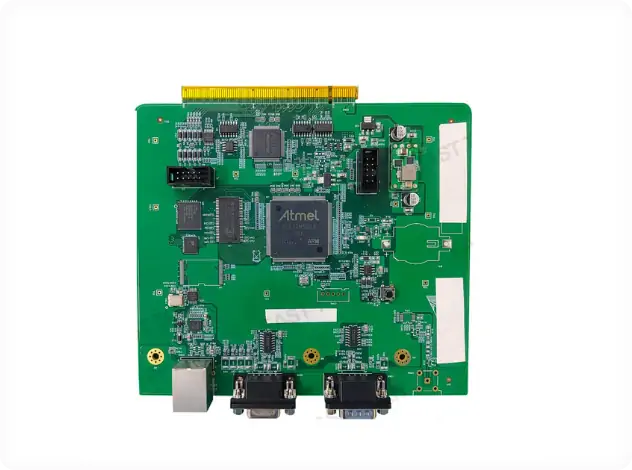


Our PCB Assembly Process (Overview)
A well-defined PCB assembly process reduces risk, improves yield, and prevents costly rework—especially for high-mix programs and mission-critical applications. At FastTurn, our PCBA workflow is designed to deliver predictable results by combining engineering-led review, disciplined material control, standardized assembly execution, and integrated inspection/testing.
Whether your build is SMT-only, through-hole, or mixed-technology, our process is structured to support prototypes, NPI programs, pilot runs, and scalable production under one controlled workflow. Each step includes checkpoints that help ensure accuracy, traceability, and consistent workmanship from first article to repeat orders.


What Is a PCB Assembly Project?
A PCB assembly project is an end-to-end effort to plan, build, and validate a printed circuit board assembly (PCBA) based on defined technical requirements, schedule, and quality standards. It covers everything from project kickoff and manufacturing preparation to assembly execution, inspection/testing, and final delivery.
The goal is to ensure the assembled boards meet functional, reliability, and compliance expectations, while keeping cost, lead time, and risk under control. A PCB assembly project commonly includes:
Requirements review and build planning (scope, schedule, quality targets)
DFM/DFA review and assembly feasibility checks
BOM validation, component sourcing/readiness confirmation, and alternates management
Process definition for SMT placement/reflow and/or through-hole soldering
Inspection and electrical testing (AOI, X-ray as needed, ICT/FCT as required)
Optional functional testing, programming, labeling, and documentation deliverables
A successful PCB assembly project is driven by controlled workflows, clear documentation, disciplined process control, and integrated quality checkpoints—so results are consistent, traceable, and aligned with application-specific technical requirements.
Our PCB Assembly Project Capabilities

We deliver end-to-end PCB assembly projects—from kickoff planning and sourcing to assembly, testing, and final documentation—supporting prototype builds, validation runs, and production programs.
- Project Build Methods
SMT assembly (fine-pitch / high-density support based on design needs)
Through-hole assembly (manual insertion, wave or selective soldering)
Mixed-technology builds (SMT + THT under a unified process plan)
- Project Sourcing Models
Turnkey project: sourcing + assembly + testing + documentation
Partial turnkey: mixed sourcing (customer + manufacturer)
Consigned project: customer-supplied components with assembly & QA support
- Project Phases & Volume Support
Engineering prototypes & EVT/DVT builds
High-mix programs with frequent ECO revisions
Pilot runs and small-to-medium production ramps
- DFM Review & Project Controls
Every PCB assembly project begins with checks for:
BOM validation, alternates, and substitution rules
Footprint/placement constraints and polarity risks
Stencil/paste strategy and critical process parameters
Reflow/thermal sensitivity considerations
THT solderability and spacing constraints (when applicable)
- Inspection, Test & Deliverables
Visual inspection and workmanship verification
AOI / X-ray (as required by package and risk)
Electrical testing and functional verification (as required)
Build report, traceability records, and test documentation (project deliverables)

Advanced Testing for Maximum Reliability
FastTurn PCB prioritizes reliability and performance across every PCB assembly project. Our integrated PCB assembly testing services are designed to detect potential issues early and verify functional integrity before shipment.
Testing is embedded within our SMT, through-hole, and mixed-technology PCBA workflows, supporting prototypes and low-to-medium volume production. By applying appropriate test methods based on design complexity and end-use requirements, we help reduce field failures and improve long-term product stability.
Testing Capabilities
- Flying Probe Testing
Fixtureless electrical testing for prototype and low-volume PCB assembly, identifying opens, shorts, and connectivity issues.
- In-Circuit Testing (ICT)
Verifies component placement, solder joints, and basic electrical performance in PCBA.
- Functional Testing
Confirms system-level operation by simulating real-world working conditions.
- Boundary Scan Testing
Non-intrusive diagnostics for complex PCB assemblies where physical access is limited.
- Burn-In Testing
Applies controlled electrical and thermal stress to identify early failures and enhance long-term reliability.
- Ionic Contamination Testing
Evaluates board cleanliness to reduce risks of corrosion and electrical leakage over time.
- Component Programming
In-house IC and embedded device programming as part of PCB assembly services.
- Custom Test Fixture and Software Development
Project-specific test solutions to support efficient validation and smoother transition from prototype to production.
Quality & Certifications
Quality at Every Step
Each PCB assembly project follows defined inspection steps, functional testing requirements, and documented process controls across every production stage to ensure accuracy, consistency, and repeatability.
Comprehensive Project Quality System Standardized inspection procedures and in-process controls applied throughout SMT, through-hole, and mixed-technology builds to maintain stable output quality.
Advanced Test Coverage Electrical and functional testing options such as flying probe, ICT, boundary scan, and application-specific functional testing for broad fault detection.
IPC-A-610 & J-STD-001 Workmanship Standards Assembly and inspection executed by trained technicians to meet recognized PCBA workmanship and soldering requirements.
Traceability & Project Documentation End-to-end traceability and controlled documentation (BOM/AVL, build travelers, test records, change logs) to support transparency and accountability.
Continuous Improvement Practices Ongoing process optimization through internal audits, training, corrective actions, and lean manufacturing methods to improve yield and reliability over time.
PCB assembly projects follow strict quality, safety, and compliance standards to ensure consistent reliability and performance. A robust quality system—supported by in-process inspections, structured testing, and internationally recognized certifications—helps maintain repeatable results across prototype, pilot, and production builds.
Quality control is embedded throughout the PCB assembly project workflow, from incoming material verification and kitting to assembly, inspection/testing, and final shipment.
Certifications
FastTurn PCB holds internationally recognized certifications that demonstrate our
commitment to quality management and high-reliability PCB assembly across diverse
industries.
- ISO 9001:2015 – Quality Management Systems
- ISO 13485:2016 – Medical Device Manufacturing
- IPC-A-610 & J-STD-001 – Assembly Workmanship Standards
- RoHS / Lead-Free Compliance – Environmental Regulations
- ANSI/ESD S20.20 – ESD Protection
- SMTA Membership – Industry Standards Participation
Our portfolio
Our PCB assembly project portfolio supports demanding performance requirements—from impedance-sensitive designs and fine-pitch components to mixed-technology builds that balance cost, manufacturability, and reliability. Across prototypes and repeat production builds, our focus remains consistent: controlled processes, verified build quality, and repeatable assembly results aligned with application-specific requirements.



Prototyping to Production
We support the full lifecycle of PCB assembly projects—from early prototypes and engineering validation builds to scalable, repeatable production. Our project workflows are designed to move quickly without sacrificing process discipline, quality control, or build consistency. We manage component readiness, process planning, and verification testing so programs can scale smoothly while maintaining stable output quality and reliable performance.
- Our PCB Assembly Project Model Supports:
- NPI (New Product Introduction) Programs: Structured support for early-stage designs and production ramp-up planning.
- DFM/DFA & Process Planning: Assembly feasibility reviews (footprints, polarity, stencil strategy, thermal profile considerations) to reduce risk before the build.
- Supply Chain & Materials Readiness: BOM validation, AVL/alternate parts management, and kitting controls to prevent shortages and delays.
- High-Mix, Low-Volume Execution: Efficient handling of variants, revisions, and small-run builds with controlled documentation and traceability.
- Accelerated Engineering-to-Production Transfer: Streamlined workflows to move from EVT/DVT builds to pilot runs and stable production faster.
- Manufacturing & Yield Optimization: Continuous refinement through build feedback, corrective actions, and process improvements to improve yield and ensure consistent build quality.


Industries & Applications We Support
We serve a diverse range of industries with precision-built PCB assembly solutions tailored to meet their unique reliability and performance challenges.
Industries & Applications We Support
FastTurn PCB provides PCB assembly services for industries that demand electrical stability and long-term reliability. Our capabilities support SMT, through-hole, and mixed-technology PCB assembly in demanding environments.
Through controlled processes and integrated testing, we deliver PCB assembly solutions aligned with application-specific technical requirements.
Industries & Applications
-
Aerospace & Defense
High-reliability PCB assemblies for mission-critical systems. -
Medical & Life Sciences
PCB assembly for diagnostic and medical electronics requiring strict quality control and traceability. -
Industrial & Automation
PCB assembly for control and automation systems exposed to vibration and heat. -
Communications
PCB assemblies supporting signal integrity and dependable performance. -
Commercial Electronics
High-mix PCB assembly integrating complex BOMs for product development and early production. -
Energy & Power Systems
PCB assembly for power conversion and energy management applications. -
Emerging Technologies
Flexible PCB assembly support from rapid prototyping to scalable production.
Why FastTurn PCB?
FastTurn PCB delivers high-performance PCB assembly solutions built on precision, reliability, and scalability. With integrated capabilities and engineering-driven execution, we support the full product lifecycle from prototype to production.

Diverse Industry Expertise
We support industrial, medical, energy, communications, and other high-reliability industries, delivering through-hole PCB assembly and mixed-technology PCBA for applications with demanding mechanical and environmental requirements.

End-to-End PCB Assembly Solutions
FastTurn provides end-to-end PCB assembly services under one controlled workflow. Early DFM involvement helps reduce risk and enables a smooth transition from fast-turn prototypes to scalable production.

Turnkey Assembly Services
Our turnkey PCB assembly services include component sourcing, SMT and through-hole assembly, testing, and final integration—simplifying supply chains and improving execution consistency.

Advanced Manufacturing Capabilities
We support complex PCB assemblies through controlled processes, skilled technicians, and flexible assembly lines suited for high-mix and low-to-medium volume production.

Comprehensive Testing & Quality Control
Quality is embedded throughout our PCB assembly process, with inspection and testing methods applied to detect issues early and ensure long-term reliability.

Efficient Lead Times
Streamlined workflows and responsive engineering enable fast prototype turnaround and reliable production schedules without compromising assembly quality.
Inside Our Facilities
Our PCB assembly projects are supported by purpose-built production capabilities, including SMT and through-hole process lines, selective and wave soldering, component preparation equipment, and ESD-safe assembly stations. Backed by IPC-certified technicians and RoHS-compliant processes, we ensure controlled execution, consistent quality, and repeatable results across every project build.


FAQ
Typically: Gerber/ODB++, BOM, pick-and-place file, assembly drawings/notes, quantity, and any test requirements.
Yes. We perform engineering review to identify manufacturability risks and align the build plan before production.
Yes. We support SMT, through-hole, and mixed PCB assembly under a unified process flow.
We support flying probe, ICT, functional test, boundary scan, burn-in, ionic contamination testing, and programming as required.
Yes. Turnkey, partial turnkey, and consigned options are available depending on your sourcing plan.
Quality is maintained through in-process inspections, documented controls, trained technicians, and traceability practices from incoming materials through final shipment.
Looking for an expert quick-turn to turnkey PCB solution?
FastTurn PCB specializes in higher layer count PCBs, quick-turn manufacturing, HDI structures, blind and buried vias, as well as controlled impedance and precision fabrication processes.