

Functional flex PCBs are flexible circuits that integrate useful electrical, mechanical, or sensing functions directly into the flexible substrate. Instead of only serving as bendable interconnects or carriers for discrete components, they can include built-in features such as embedded resistors, strain gauges, and other functional elements.
This approach turns the flex PCB into more than a routing structure. It becomes a thin, lightweight, and flexible functional platform for compact electronic designs.
By forming functional elements directly on or inside the flex circuit, designers can reduce external components, save assembly space, and improve integration in applications where size, flexibility, and reliability matter.
What Is a Functional Flex PCB?
A functional flex PCB is a flexible circuit that integrates functional elements directly into or onto the flexible substrate. Instead of only providing conductive traces, it can also support electrical, mechanical, or sensing functions.
Common integrated features include:
- Embedded resistor structures
- Strain-sensing elements
- Embedded strain gauges
- Other functional circuit features
This allows the flex PCB to become more than a bendable interconnect or component carrier. It becomes part of the working system, helping compact electronic products save space, reduce external components, and improve integration.
The Core Idea Behind Functional Flex PCBs
The concept of a functional flex PCB is similar to embedding passive components in multilayer rigid PCBs.
In multilayer rigid boards, resistors, capacitors, and other passive components can be embedded to save space, shorten signal paths, and improve integration.
Functional flex PCBs follow a similar concept, but the functional elements are created on flexible substrates.
This approach adds more value to the flex PCB. It is no longer just a flexible interconnect. It becomes a platform for functional integration.
Why Build Functional Elements on a Flex PCB?
Many flexible electronic products have very limited space. If every function depends on separate external components, the design can become thicker, heavier, and more complex to assemble.
Integrating functional elements directly into the flex PCB can offer several advantages.
Higher Integration Density
Functional elements built into the flex circuit can reduce the number of external components, making the overall structure more compact.
For products that require a small form factor, thin construction, or high-density routing, a functional flex PCB can simplify the overall design.
Space Savings
For small, thin, lightweight, or bendable products, integrating functions into the board can help reduce the total package size.
This is especially useful when the available assembly space is limited and traditional surface-mounted components are difficult to place.
Higher Added Value
A standard flex PCB mainly provides interconnection.
A functional flex PCB can provide interconnection, sensing, electrical adjustment, and other functions simultaneously. This increases the circuit's technical value.
Better Fit for Specialized Applications
Some applications require the functional element to be closely integrated with a flexible structure, especially in bending, stress-sensitive, or very tight areas.
In these cases, forming the functional structure directly on the flex PCB can be more effective than mounting a separate component later.
Typical Process: Vacuum-Deposited Nickel-Chromium Alloy
One representative process is the use of vacuum-deposited nickel-chromium alloy to create functional structures inside a flex PCB.
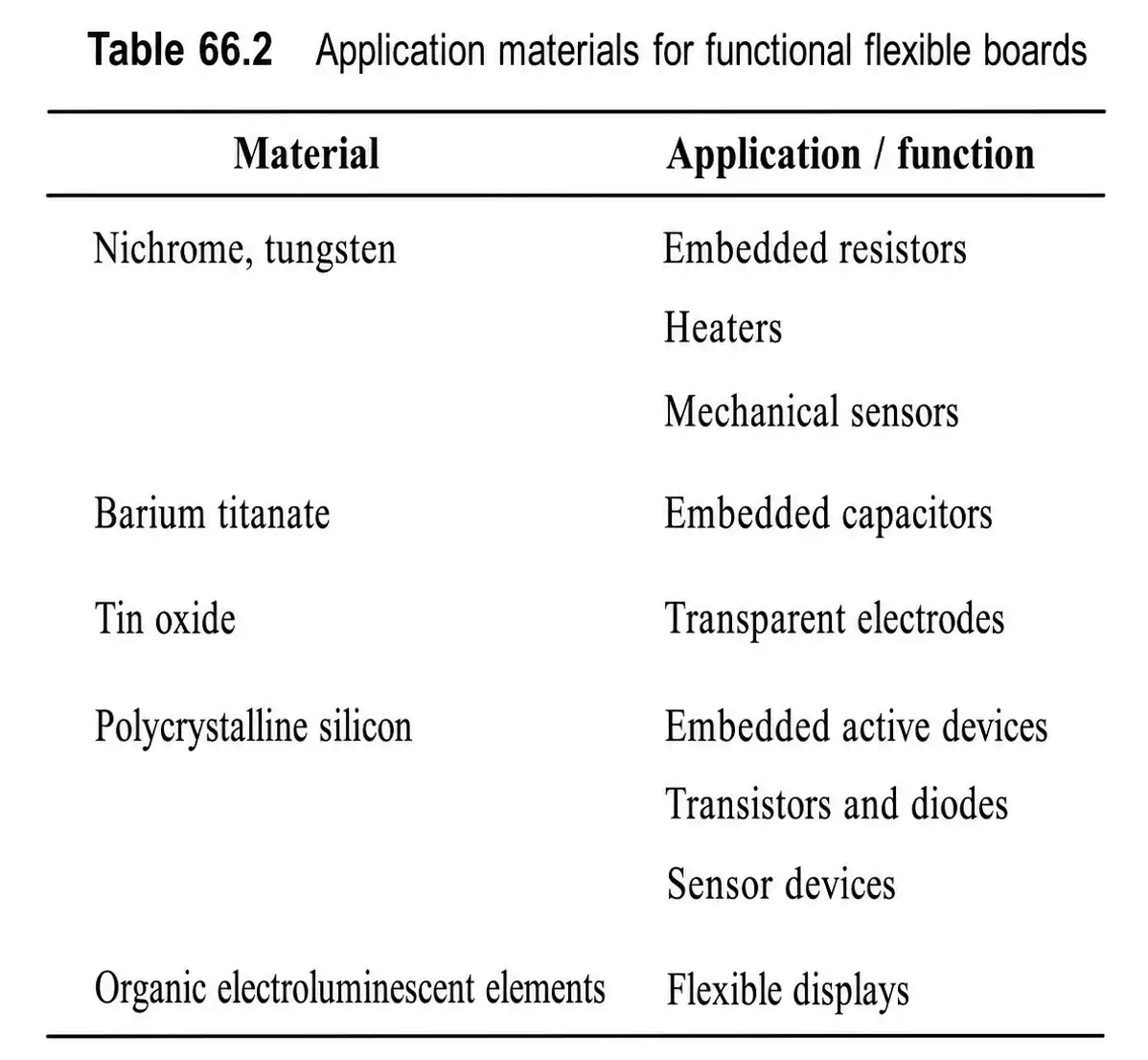
Nickel-chromium alloy, also known as NiCr alloy, is commonly used in resistive and strain-sensing applications. Through vacuum deposition, a thin metal film with controlled resistance characteristics can be formed on the flexible substrate.
Two typical examples are:
- Embedded resistors
- Embedded strain gauges
In both cases, the functional element is embedded in the flex PCB rather than mounted as a separate component on the surface.
This makes vacuum-deposited NiCr flex PCB technology useful for applications that require thin, stable, and integrated functional layers.
Embedded Resistor Flex PCB
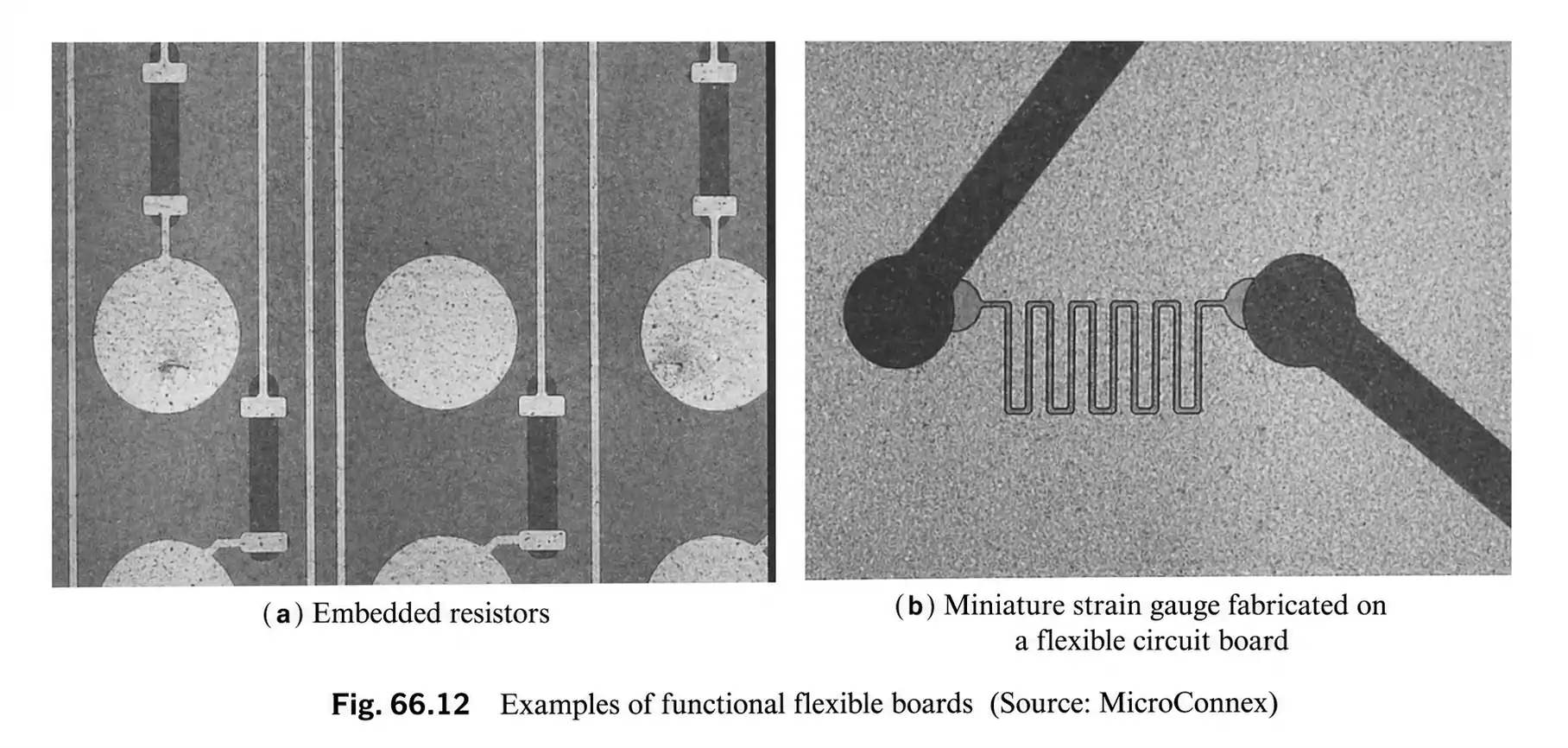
An embedded resistor flex PCB is one important example of a functional flex PCB.
In conventional PCB design, resistors are usually mounted as surface-mount components. In a functional flex PCB, the resistor structure can be formed directly on the flexible substrate by using specific materials and processes.
This can reduce the number of surface-mounted parts, support a thinner design, and improve overall integration.
Embedded resistors are especially useful in applications where:
- Space is limited
- Board thickness must be minimized.
- The number of solder joints needs to be reduced.
- A compact and integrated circuit structure is required.
By integrating the resistor into the flex circuit, the design can become thinner, cleaner, and better suited to high-density electronic assemblies.
Embedded Strain Gauge Flex PCB
Another typical application is the embedded strain gauge flex PCB.
A strain gauge is used to detect deformation caused by force, bending, stretching, or mechanical stress. Since flex PCBs are naturally bendable, integrating a strain-sensing structure into the flex circuit allows the board to provide both interconnection and sensing functions.
This type of structure is well-suited for applications that need to monitor:
- Bending
- Pressure
- Deformation
- Mechanical stress
Compared with an external sensor, an embedded strain gauge can be more closely integrated with the flexible structure. This helps create thinner, lighter, and more integrated sensing designs.
For products that require flexible sensing, a strain-sensing flex PCB can provide both mechanical flexibility and electrical functionality in a single structure.
The Value of Functional Flex PCBs
The biggest value of a functional flex PCB is that it changes the role of the flexible circuit.
A traditional flex PCB mainly answers two questions:
- How to connect
- How to bend
A functional flex PCB goes further and asks how to integrate useful functions directly into the flexible structure.
This allows the flex PCB to provide:
- Flexible interconnection
- Component support
- Integrated functional elements
- Sensing or electrical adjustment
- Higher system-level integration value
As a result, a functional flex PCB is not just a circuit board. It can also become a functional platform.
Functional Flex PCB vs. Standard Flex PCB
A standard flex PCB usually focuses on:
- Trace layout
- Copper foil
- Coverlay
- Bending reliability
- Assembly performance
A functional flex PCB also needs to consider:
- Whether functional material layers can be built directly on the substrate
- Whether the functional layer has a stable electrical performance
- Whether the functional structure can withstand bending or stress
- Whether the functional element is compatible with the flex PCB manufacturing process
- Whether the embedded structure can maintain long-term reliability
Because of these added requirements, functional flex PCBs often require tighter process control than standard interconnect-only flex circuits.
Key Design and Manufacturing Considerations
Several factors are important when designing and manufacturing functional flex PCBs.
Material Selection
The functional material must be compatible with the flexible substrate.
For example, a nickel-chromium thin film must provide the required resistance characteristics, adhesion, and long-term stability.
Process Compatibility
Vacuum deposition, patterning, lamination, coverlay processing, and other steps must work together without damaging or changing the performance of the functional layer.
This is especially important when producing embedded components in flex PCB structures, as the functional layer must remain stable throughout the entire manufacturing process.
Bending Reliability
Since flex PCBs may bend during use, the functional layer must also tolerate bending.
This is especially important for resistive layers and strain-sensing layers. If the layer cracks or its electrical value drifts during bending, product reliability will be affected.
Embedded Structure Control
For embedded resistors and embedded strain gauges, the position, thickness, pattern size, and protective structure must be carefully controlled.
Good process control helps ensure that the functional flex PCB maintains stable performance during assembly and use.
Conclusion
Functional flex PCBs expand the role of flexible circuits beyond simple interconnection. By integrating features such as embedded resistors and embedded strain gauges directly into the flex substrate, they can support thinner, lighter, and more functional electronic designs.
Vacuum-deposited nickel-chromium alloy is one example of how functional elements can be built into a flex PCB structure for resistance or strain-sensing applications.
For products that require compact size, flexible sensing, and higher integration, functional flex PCB technology offers a practical path forward.
At FastTurnPCB, we support flexible PCB solutions for advanced electronic designs that require reliable structure, precise manufacturing, and functional integration.