




If you’ve ever worked with older fluorescent fixtures in schools, warehouses, garages, or offices, you might have asked yourself: Is it PCB Ballast?
And when we say PCB, we don’t mean printed circuit boards. Here, PCB stands for polychlorinated biphenyls, a toxic chemical used in older fluorescent light ballasts for insulation and stability.
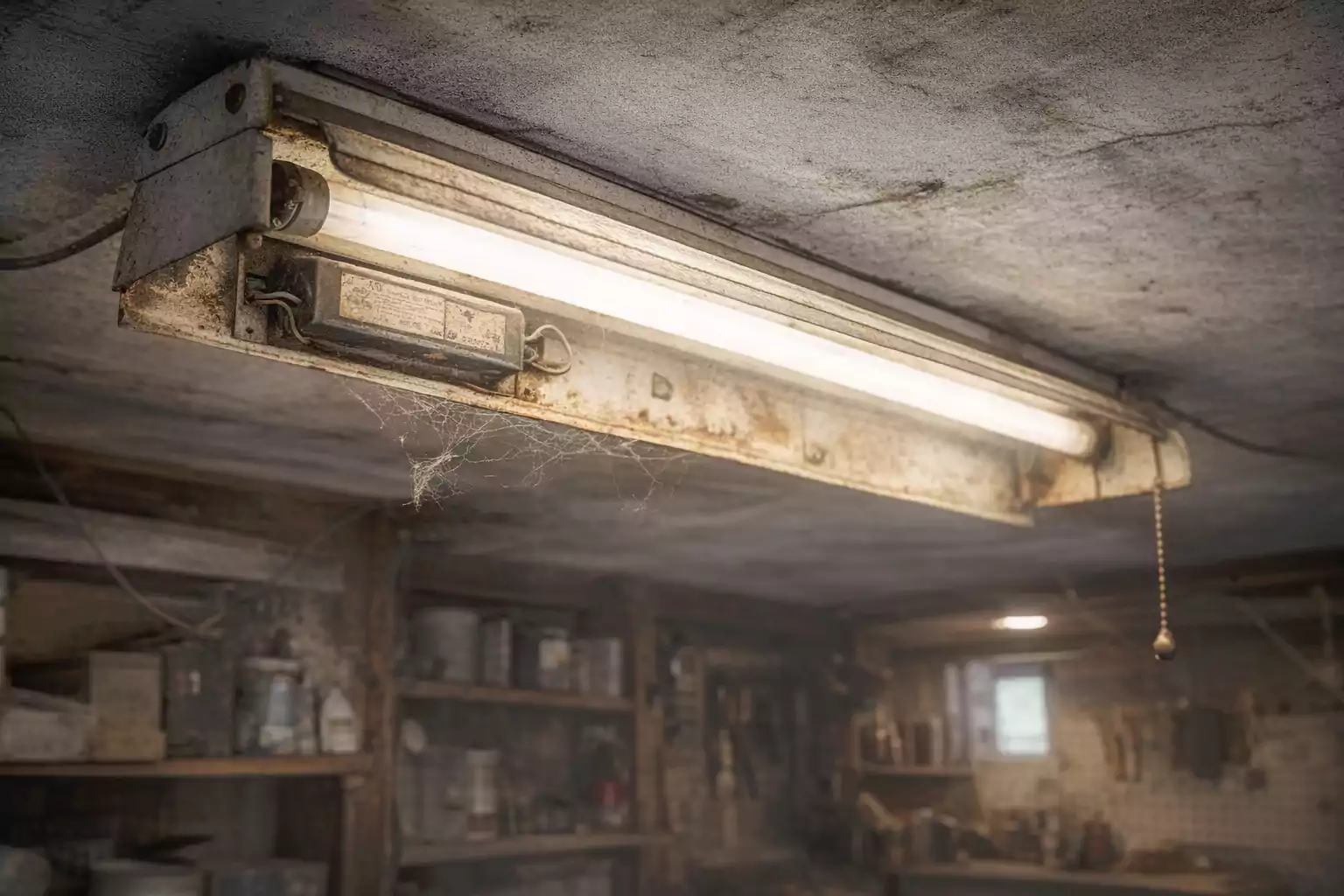
Many of these ballasts are still installed today. Because they’re long past their intended lifespan, they can leak, overheat, or fail, creating safety and disposal challenges.
Quick Take: What You Need to Know
If you only remember a few points, keep these in mind:
- PCB here means polychlorinated biphenyls, not circuit boards.
- If the ballast is old, unlabeled, or installed before 1979, treat it as suspect.
- T12 magnetic ballasts are the main risk category (T8/T5 systems are generally safe).
- Leaking ballasts are higher-risk → handle carefully and dispose properly.
- The simplest long-term solution is usually replacing them with LED fixtures.
What Is a PCB Ballast?
A ballast is the component that regulates electrical current in fluorescent lighting. In many older ballasts, manufacturers used PCBs in:
- Capacitors, which help control the current flow.
- Potting material, which insulates the ballast and reduces noise.
PCBs were popular because they were stable and heat-resistant. But these same properties make them environmentally persistent and toxic to humans.
Even if a fixture looks fine, a PCB-containing ballast inside can pose a hidden hazard.
Why PCB Ballasts Are Still a Problem
1. Age + Risk of Failure
Most PCB ballasts are decades old. As they age, they can:
- Overheat
- Buzz or hum loudly
- Smoke or emit burnt odors
- Leak oily residue
2. Leaks are costly
A leaking ballast can contaminate the fixture and surrounding surfaces. Cleaning it up isn’t simple—it’s much more complicated than swapping out a bulb.
3. Risk exists even before visible leaks
Old ballasts can emit small amounts of PCBs even if nothing is leaking yet. Waiting until failure is a risky strategy.
Common key locations: pre-1979 buildings, schools, warehouses, and garages.
How to Identify a PCB Ballast
Most people want a clear yes/no answer, but sometimes it’s not that simple. Here’s a practical checklist:
Four Key Indicators
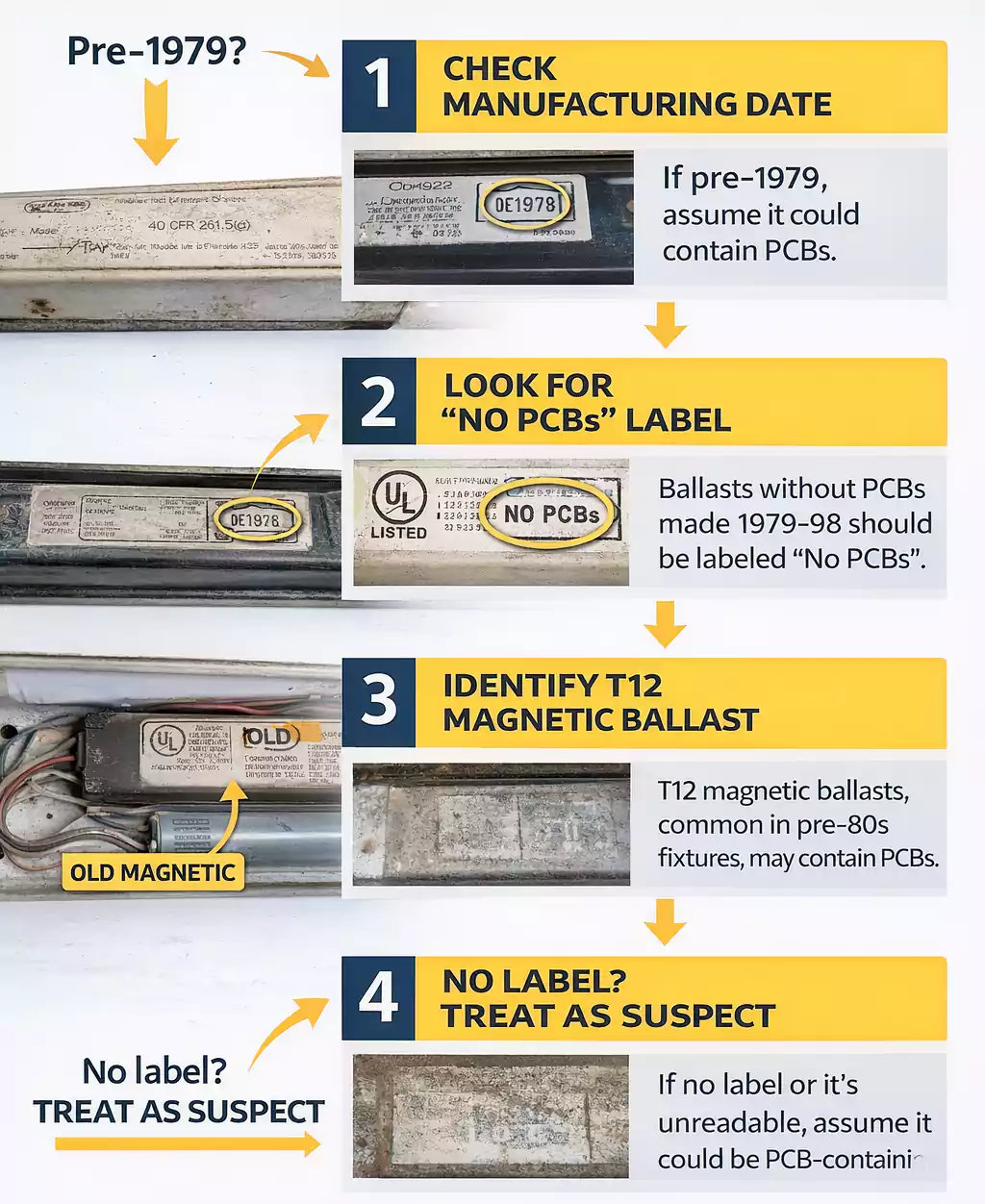
- Manufacturing date
- Pre-1979 ballasts are most likely PCB-containing.
- “No PCBs” label
- Ballasts made between July 1, 1979, and July 1, 1998, should be labeled “No PCBs” if they’re non-PCB.
- Ballast type
- T12 magnetic ballasts are the main PCB risk. T8/T5 systems are generally safe.
- Missing or illegible label
- If the label is gone or unreadable, assume the ballast contains PCBs.
Quick Reference Table: Identifying PCB Ballasts
| Clearly marked “No PCBs” | Non-PCB ballast | Recycle or dispose per local rules |
| No label | Could be PCB | Treat as suspect; handle carefully |
| Pre-1979 fixture | Higher likelihood of PCB | Plan for removal and proper disposal |
| T12 magnetic ballast | Primary PCB risk | Prioritize for screening/removal |
| Leaking/oily residue | Failure + contamination risk | Stop, isolate, and follow proper handling procedures |
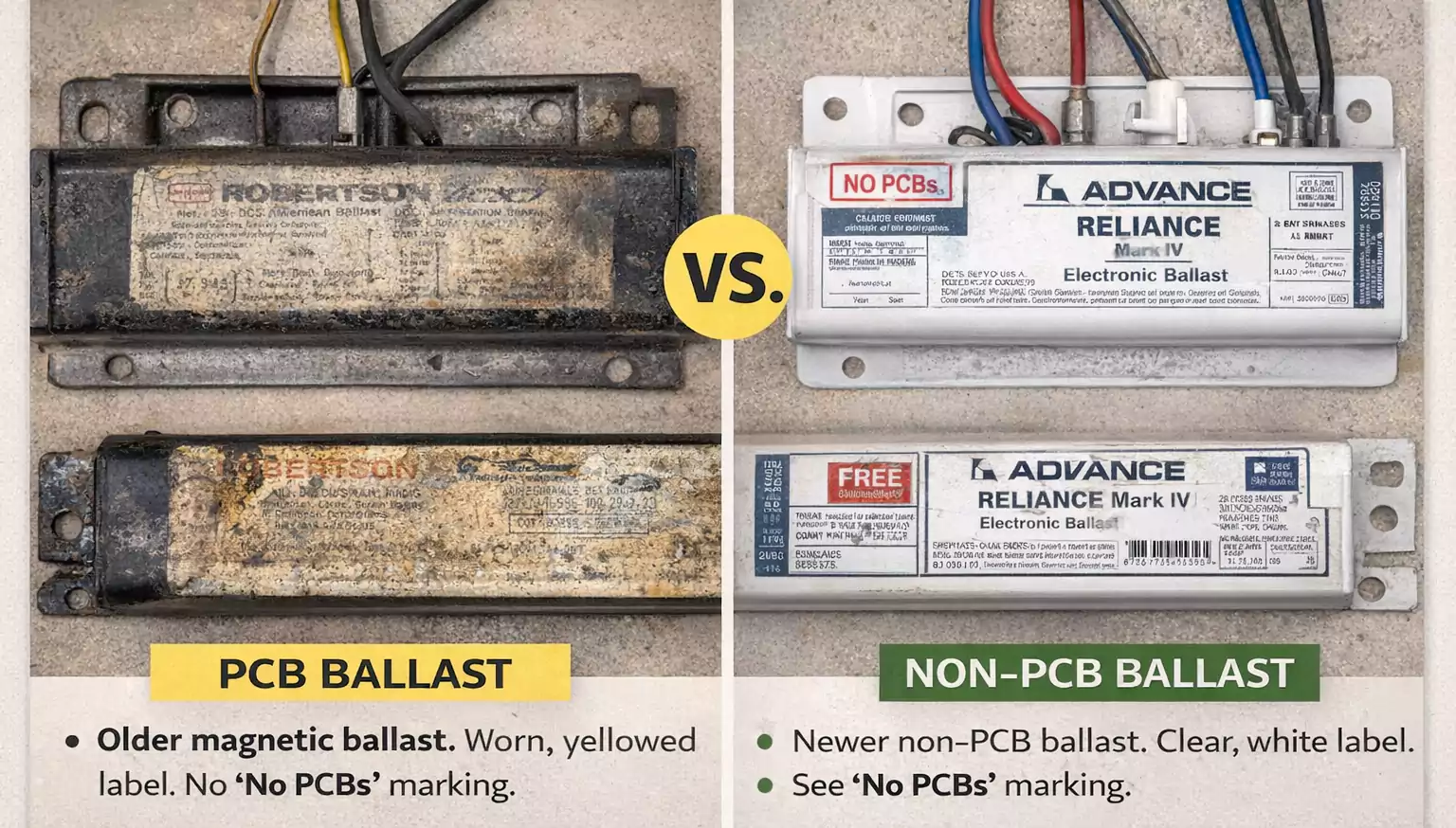
Signs a Ballast May Be Failing
Even if it’s not leaking yet, there are warning signs:
- Flickering or inconsistent lighting
- Loud buzzing or humming
- Overheating
- Burnt smell
- Dark stains or scorch marks
Red flag: visible oily or yellow-brown residue. That’s a clear signal that the ballast needs professional handling.
What to Do With Suspect or Leaking Ballasts
Non-leaking ballast:
- Remove carefully and store safely.
- Keep it from being crushed or punctured.
- Recycle or dispose of through qualified channels.
Leaking or ruptured ballast:
- Stop work immediately.
- Avoid touching the material.
- Contain the area.
- Contact licensed waste handlers or EHS professionals.
Should You Replace Old Ballasts?
Yes. In most older buildings, replacement is the safest and smartest move:
- Prevents PCB exposure
- Reduces the chance of leaks or fires
- Simplifies future maintenance
- Provides an opportunity to upgrade to LED lighting, which eliminates old ballast risks
Planning a retrofit is better than waiting for a ballast to fail.
PCB Ballasts vs. Modern LED Systems
| Power control | Ballast | LED driver (or integrated electronics) |
| PCB chemical risk | Possible in older ballasts | Not applicable |
| Failure patterns | Overheating, leaks, flicker | Driver wear, component aging |
| Best strategy | Screen and remove suspect ballasts | Upgrade fixtures to LEDs |
PCB ballasts are a legacy hazard. LED retrofits remove this concern entirely, while modern LED PCBs/drivers are safe and low-maintenance.
FAQ
How do I identify a PCB ballast?
Check the label for “No PCBs,” note the fixture’s age, and identify the system type. When in doubt, treat it as suspect.
Are all old fluorescent ballasts PCB ballasts?
No, but older units, especially pre-1979 T12 magnetic ballasts, are more likely to contain PCBs.
What does “No PCBs” mean?
It indicates the ballast was manufactured without PCBs.
Can I recycle fluorescent ballasts?
Yes, but only through qualified recyclers. Suspect PCB ballasts require special handling.
What should I do if a ballast is leaking?
Stop work, isolate the area, avoid contact, and contact licensed handlers.
Final Thoughts
PCB ballasts are a classic “hidden hazard” because the fixture can look normal while the internal components are well past their safe service life. If you’re dealing with older fluorescent lighting—especially unlabeled units or T12 magnetic systems—screening and planned replacement are usually the safest path.
And if your next step is an LED upgrade, modern lighting electronics (drivers and lighting PCBs) can eliminate ballast-related uncertainty entirely.
FastTurnPCB supports customers building modern electronics reliably and efficiently—so when you’re ready to move from legacy lighting hardware to updated designs and products, we’re here to help.